

History
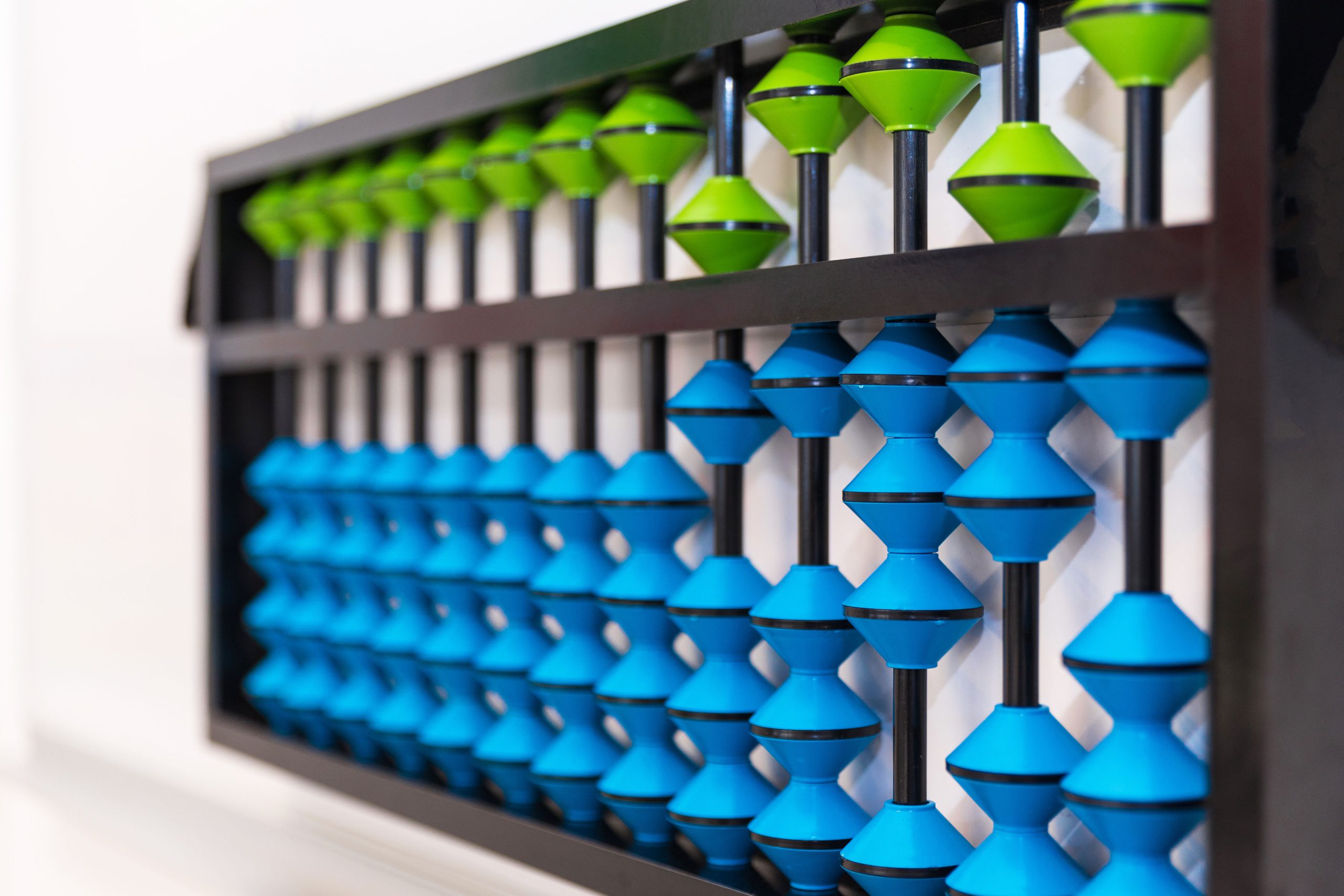
The abacus is a world-famous calculating tool. It was probably developed in southern Mesopotamia in the 3rd millennium BC and was used in various versions until the 17th century - a 2000-year success story! Many cultures valued and loved the advantages of the calculating tool and made their own versions. We know Babylonian, Roman, Greek, Chinese and Japanese abacus, to name just a few. Today, in the digital age, the abacus is used as a calculating tool primarily in Japan. There it is known as the Soroban and is used in this form in the modern HIKARI program.
How do you calculate on an abacus?
The answer to this question can be summed up in two words: Not at all. You don't calculate on an abacus, you calculate with it!
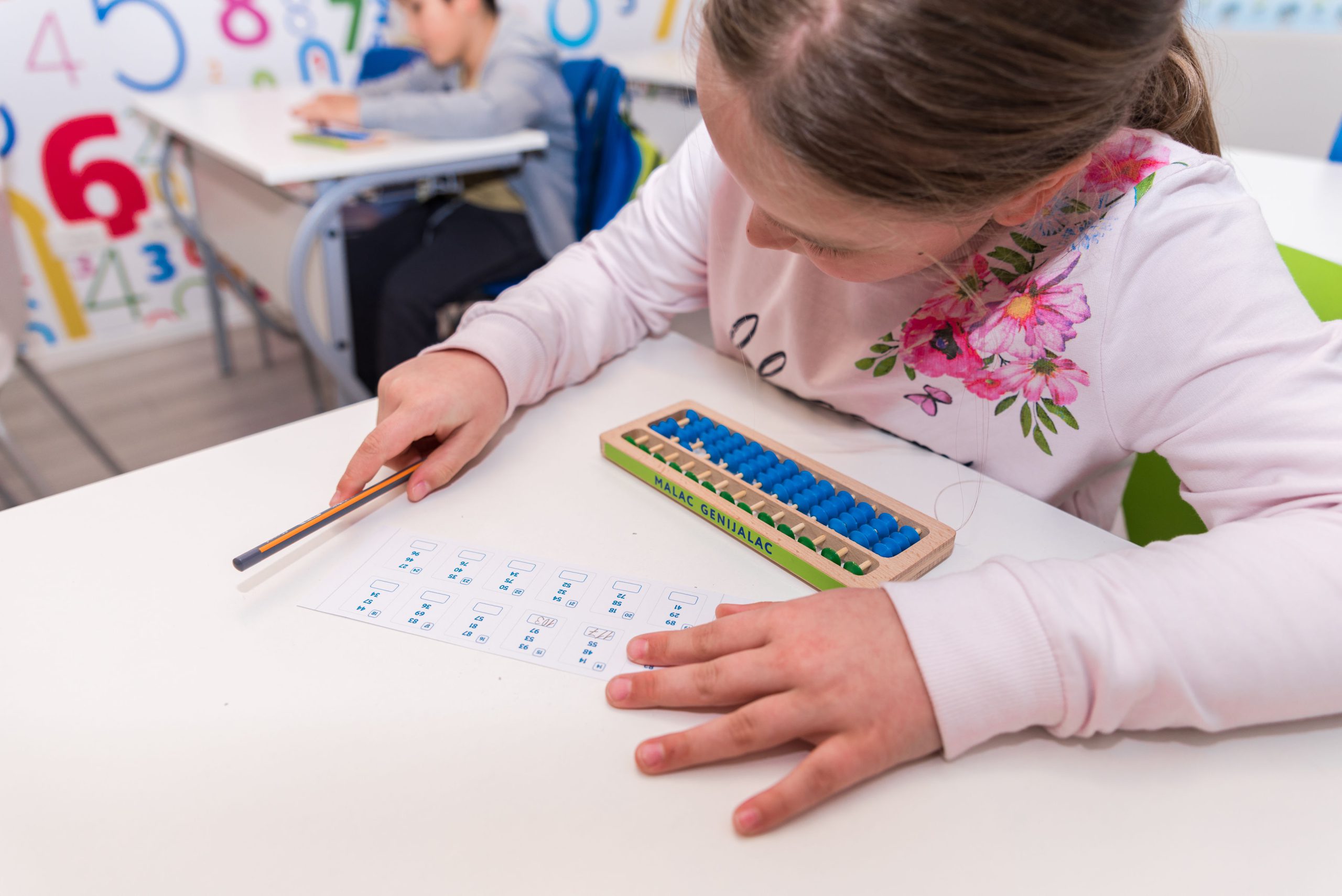
When calculating with an abacus, the beads are moved along the rod using the thumb and index finger, which leads to an immediate representation of the result. Since the numbers one to nine can be represented on each individual rod, we can represent the number range 0 to 99 with just two rods. To expand the number range, we expand the value of the beads from right to left by a factor of 10. Just like with written calculations! With a little imagination, you don't need four basic arithmetic operations, just one - addition. In this sense, in multiplication, only the summands are added together - from 2 + 2 + 2 = 3 * 2.
Subtraction is logically opposite to addition. This can be achieved mathematically in two ways - either you subtract a positively oriented quantity or you add a negatively oriented quantity. An example to illustrate this: 5 - 3 = 5 + (-3).
Division, which we want to understand as a simplified logical counterpart, can also be represented as an addition problem: 6 : 3 = 6 + (-2) + (-2).
It is obvious that the difference lies in the complexity of the calculation. We can therefore reduce any mathematical calculation to addition and represent the result as a sum. It is just a question of how complex the term is.
On the abacus, we only represent the respective (intermediate) result in the form of a specific arrangement of beads. The results are documented using finger movements and can be carried out very quickly using two fingers. Each calculation carried out thus finds its physical expression - on the one hand in the numbers embodied in beads, and on the other hand as a movement of the body itself.

Benefits of using Abacus
When calculating with the abacus, we not only use our “gray matter” but also motor elements. The good thing about this is that both halves of the brain are constantly stimulated, thus further expanding the neural network.